
The most effective titration isn't about reaching the maximum advancement as fast as possible; it's about finding the precise millimeter where the airway opens and the jaw muscles remain relaxed. You've likely felt the frustration of a patient returning with a snapped strap or complaints of morning muscle soreness because the advancement was too aggressive. This EMA appliance titration guide addresses those common hurdles, helping you manage the 36 different strap combinations without the guesswork that leads to patient discomfort or appliance breakage.
We understand that a successful sleep practice relies on predictable outcomes and efficient appointments. You'll learn how to balance elastic tension with mandibular distance to achieve the 65-75% success rate typical of these devices while ensuring your patients stay compliant. This article provides a clear clinical sequence for transitioning between lengths and strengths; it's designed to help you maximize airway patency and minimize chairside stress for both your team and your patients.
Key Takeaways
- Master the relationship between strap length and pharyngeal space to effectively reduce airway collapse and snoring.
- Use this EMA appliance titration guide to decode the 36 strap combinations, balancing length and firmness for personalized patient care.
- Implement a structured clinical protocol that prioritizes a conservative adaptation period to ensure long-term patient compliance and comfort.
- Learn to troubleshoot common challenges like TMJ soreness and strap breakage by fine-tuning material tension and advancement speed.
- Discover how lab-fabricated precision and accurate 3D models provide the stable foundation necessary for predictable titration results.
Understanding the EMA Titration Mechanism
Titration is the clinical heartbeat of dental sleep medicine. Within this EMA appliance titration guide, we define titration as the methodical, incremental advancement of the mandible to maintain a patent airway during sleep. By using elastic straps of varying lengths, you can gently guide the lower jaw forward, which pulls the tongue and soft tissues away from the posterior pharyngeal wall. This process increases the volume of the airway, reducing the tissue vibration known as snoring and preventing the total collapses that characterize obstructive sleep apnea.
Unlike many rigid alternatives, the EMA system relies on flexibility. A Mandibular advancement splint works by repositioning the jaw, but the EMA's specific use of elastics allows for natural lateral and vertical movement. This freedom is vital. It prevents the "locked-in" feeling that often leads to patient non-compliance. Most clinical protocols recommend starting at a baseline of 50% to 60% of the patient's maximum protrusive range. This conservative start provides a foundation for success without overtaxing the patient's musculature on night one.
The Role of Mandibular Advancement in OSA
The relationship between protrusive distance and airway volume is direct but highly individual. As the mandible moves forward, the hyoid bone and attached musculature follow, creating a larger pharyngeal opening. You'll often start with subjective titration, which relies on the patient's report of reduced snoring or increased morning alertness. However, the gold standard remains objective titration, where a follow-up sleep study confirms a reduction in the Apnea-Hypopnea Index (AHI). We always advocate for a "slow and low" approach. Advancing too quickly can trigger TMJ strain; gradual steps allow the ligaments to adapt comfortably.
EMA vs. Rigid Advancement Devices
Traditional devices often use metal screws or rigid plastic arms to hold the jaw in place. While effective, these can feel restrictive. The EMA's elastic straps offer a distinct advantage: they provide constant tension that contributes to muscle toning in the airway over time. Because the straps are flexible, patients can yawn, speak, or sip water without removing the appliance. This flexibility significantly boosts compliance rates. If a patient feels trapped by their device, they won't wear it. The EMA eliminates that barrier, making your role as a provider much easier.
The EMA Strap System: Decoding Colors and Lengths
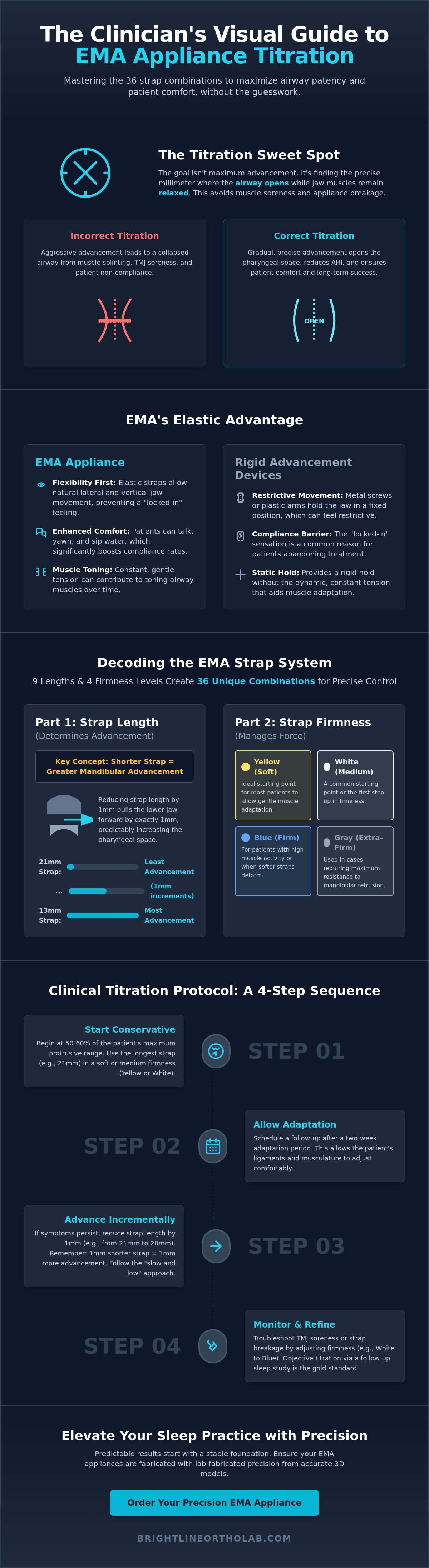
The versatility of the EMA system stems from its 36 unique strap combinations, allowing you to customize treatment for every patient's specific anatomy and tolerance. Understanding these variables is the core of any effective EMA appliance titration guide. Each strap is defined by two primary characteristics: length and firmness. These are clearly marked on the strap's surface, with the length embossed in millimeters and the firmness indicated by the material's color. By mastering how these two factors interact, you can fine-tune the advancement with 1mm precision.
The length range spans from 21mm down to 13mm. It's often counterintuitive for clinicians new to the system, but the shorter the strap, the greater the mandibular advancement. A 21mm strap provides the least amount of forward pull, making it the ideal baseline for most cases. As you move down the scale to a 13mm strap, the mandible is drawn further forward to open the pharyngeal space. Because these increments are so precise, you can make small, predictable changes that lead to significant improvements in airway patency.
Firmness Levels and Patient Comfort
Firmness is categorized into four color-coded levels: Yellow (soft), White (medium), Blue (firm), and Gray (extra-firm). We generally suggest starting patients with Yellow or White straps. These softer materials allow the masticatory muscles to adapt to the new jaw position without excessive strain. If a patient exhibits high muscle activity or if you notice the straps are significantly deforming between appointments, transition to Blue or Gray. Every strap has an "Elastic Limit." If a soft strap is stretched beyond its intended tension, it loses its structural memory and fails to hold the jaw in the therapeutic position. For clinicians who value meticulousness, ordering your EMA sleep appliances from a lab that prioritizes digital precision ensures these straps fit perfectly on the buttons every time.
Calculating Advancement Increments
One of the most user-friendly aspects of the EMA is the 1:1 ratio. A 1mm reduction in strap length translates directly to 1mm of forward mandibular movement. A standard starting sequence might begin with a 21mm White strap. After a two-week adaptation period, you might move to a 20mm White strap to further increase airway volume. While the system allows for different strap lengths on the left and right sides to address jaw asymmetry, we rarely recommend this. Using asymmetrical lengths can create uneven pressure on the TMJ, potentially leading to discomfort. Stick to symmetrical adjustments to maintain a balanced, stable clinical outcome.
Step-by-Step EMA Titration Protocol
Executing a successful titration requires a structured approach that respects the patient's biological limits. While mechanical adjustments are simple, the neuromuscular response of the patient is complex. This EMA appliance titration guide breaks the process into five manageable steps to ensure predictable results and high patient satisfaction. By following a methodical sequence, you minimize the risk of jaw strain while maximizing the therapeutic impact on the airway.
- Step 1: Verify Initial Fit and Retention. Begin by seating the appliance with the longest possible straps, typically 21mm. Ensure the trays are fully seated and the retention is adequate. If the appliance dislodges during the night, titration cannot occur.
- Step 2: Establish an Adaptation Period. Instruct the patient to wear the baseline appliance for 1 to 2 weeks. This phase isn't about immediate symptom relief; it's about allowing the masticatory muscles and the TMJ to adapt to the presence of the device.
- Step 3: Evaluate Patient-Reported Symptoms. At the follow-up, ask specific questions. Is the bed partner still reporting snoring? Is the patient feeling more refreshed? Are they experiencing morning jaw fatigue? These subjective markers guide your next move.
- Step 4: Incrementally Shorten Strap Length. If symptoms persist and the patient is comfortable, move to a strap 1mm shorter (e.g., from 21mm to 20mm). Continue this 1mm-at-a-time approach every 1 to 2 weeks until the patient reports significant relief.
- Step 5: Refine Strap Firmness. If you've reached a therapeutic position but the patient's mandible is "falling back" during deep sleep, or if the straps show signs of excessive stretching, increase the firmness color (e.g., moving from White to Blue).
Monitoring Patient Progress
Success in dental sleep medicine is often found in the details of a titration log. We recommend providing patients with a simple diary to track their strap changes and morning jaw feel. This data helps you identify the "Sweet Spot," which is the point of maximum symptom relief with minimum jaw discomfort. If you've trained your patient well, you might permit them to change straps at home. However, clear instructions are vital to prevent them from advancing too quickly and causing muscle spasms.
Clinical Evaluation of the Airway
During chairside check-ups, look beyond the device itself. Observe the patient’s tongue position and soft palate clearance with the appliance in place. A critical marker of success is the ability to maintain a natural lip seal; if the advancement is so aggressive that the patient must mouth-breathe, the therapy may be less effective. Once the patient is symptom-free for several weeks, it's time to refer them back to their sleep physician for an objective follow-up sleep study, such as an HST or PSG, to confirm the AHI reduction.
Clinical success isn't always a straight line. Even when you follow a precise EMA appliance titration guide, individual patient responses can vary. Most hurdles are manageable with minor adjustments to the protocol or material selection. By anticipating these issues, you can provide the reassurance your patients need to stay committed to their therapy.
- TMJ Discomfort: Muscle soreness is common in the first few weeks. However, true joint pathology requires a pause. If a patient reports sharp, localized pain in the joint, stop advancement immediately.
- Strap Breakage: Frequent breakage is often a sign of heavy nocturnal bruxism. If Yellow or White straps are snapping, move to the firmer Blue or Gray materials. These extra-firm elastics are specifically designed to withstand higher mechanical loads.
- Inadequate Advancement: Reaching the 13mm limit without symptom relief is rare but happens. In these cases, re-evaluate the initial bite registration. If the baseline was set too far posteriorly, the appliance may need to be remade.
- Appliance Dislodgement: If the trays pop off, check the retention on the molars. Precise lab work is the best defense here. If you're experiencing frequent fit issues, consider switching to high-quality EMA sleep appliances that utilize accurate 3D printed models for superior retention.
Managing Jaw Soreness and Bite Changes
Provide patients with morning occlusal guides or "bite tabs." These simple tools help the mandible return to its natural centric relation after a night of advancement. It's crucial to differentiate between transient muscle fatigue and persistent joint pain. If soreness doesn't resolve within 30 minutes of waking, use a "backing up" protocol. Increase the strap length by 1mm to the last comfortable setting and wait another week before attempting to advance again.
Strap Durability and Maintenance
Educate your patients on the phenomenon of "creep." Over time, the elastic material naturally loses its tension and may slightly elongate. This degradation is accelerated by improper cleaning; patients should avoid harsh chemicals or boiling water. We recommend a typical replacement cycle of 3 to 6 months for all EMA straps. Regularly checking for signs of thinning or permanent deformation during follow-up appointments ensures the therapeutic tension remains consistent.
Maximizing Clinical Success with Lab Precision
The most detailed EMA appliance titration guide is only as effective as the physical device in the patient's mouth. If the initial trays lack meticulous fit or retention, the incremental advancement of the mandible becomes impossible to manage. Successful titration begins in the laboratory. When the trays are fabricated with high-level precision, the buttons are perfectly positioned to handle the specific tension of each elastic strap. This accuracy ensures that the force is distributed evenly across the dental arch, preventing localized pressure points that lead to patient discomfort and non-compliance.
We believe that a collaborative relationship between the clinician and the orthodontic lab is essential for troubleshooting complex cases. High-quality materials and digital workflows significantly reduce the need for time-consuming chairside adjustments. By starting with a stable, well-retained appliance, you can focus on the clinical nuances of the patient’s airway rather than fighting with a poorly fitting device. This reliability is what turns a one-time consultation into a long-term success story for your practice and your patients.
The Importance of Accurate Impressions
Stability starts with the quality of the impression. Capturing the distal of the terminal molar is critical for EMA stability; without this landmark, the appliance may "teeter-totter" during the night as the patient moves. We encourage clinicians to explore our resources on sending STL files for digital orthodontic fabrication to ensure the highest level of digital accuracy. Distorted models often lead to "button flare," where the attachment points are angled incorrectly. This misalignment causes straps to pop off during sleep, which interrupts therapy and frustrates the patient. Utilizing 3D Printed Models from digital scans eliminates these traditional errors and ensures a snap-fit every time.
Partnering with Brightline Orthodontic Lab
Think of Brightline Orthodontic Lab as a seasoned expert and a reliable extension of your clinical team. We specialize in providing the dependable tools you need for sleep apnea therapy, including our meticulously engineered EMA and Dorsal sleep appliances. Our goal is to simplify your workflow by delivering appliances that fit right the first time, allowing you to move through titration appointments with quiet confidence. We understand the logistical stress of managing sleep cases and are here to support your success with craftsmanship you can trust. Ready to prescribe? Download our Sleep Appliance Lab Slip and let’s work together to achieve optimal results for your patients.
Elevating Your Sleep Practice Through Precision
Mastering the sequence of strap adjustments is the final step in delivering life-changing sleep therapy. By following this EMA appliance titration guide, you can confidently navigate the transition from baseline adaptation to therapeutic advancement. Clinical success ultimately relies on two pillars: your methodical protocol and the accuracy of the appliance itself. When the trays fit perfectly and the buttons are placed with meticulous precision, your patients experience fewer complications and significantly higher compliance.
We're here to support your practice with the dependability your patients deserve. With over 18 years of orthodontic lab expertise and the strict quality control of US-based manufacturing, our team provides dedicated support for every sleep apnea case you manage. We simplify the technical side of fabrication so you can focus entirely on patient outcomes and chairside care. It's our goal to ensure every device we produce acts as a reliable tool in your clinical arsenal.
Partner with Brightline for Precision-Engineered EMA Appliances to ensure your next case starts with the perfect fit. We look forward to being a reliable ally and an extension of your clinical team as you help your patients achieve better sleep.
Frequently Asked Questions
How often should EMA straps be changed during the titration phase?
You should generally change the straps every 1 to 2 weeks. This timeline provides enough space for the jaw muscles and the temporomandibular joint to adapt to the new position. If the patient is comfortable and still experiencing symptoms like snoring, you can move to the next 1mm increment. Rushing this process often leads to muscle fatigue, so patience is key for long-term compliance.
What is the most common starting strap length for a new EMA patient?
The 21mm strap is the standard starting point for most clinical cases. This length usually places the mandible at roughly 50% to 60% of the patient's maximum protrusive range. Starting with the longest strap ensures a gentle introduction to the therapy. It's much easier to advance a patient who has had a comfortable first week than to manage one who is in pain from over-advancement.
Can I use different colored straps on the same appliance?
Yes, you can mix strap firmness to customize the tension for your patient. For instance, if a patient needs slightly more support than the White straps provide but isn't ready for a full set of Blue straps, you might use one of each. While you can mix colors, we strongly recommend keeping the lengths symmetrical. Using different lengths on the left and right can cause uneven jaw loading and discomfort.
What should I do if the patient experiences persistent TMJ pain?
Instruct the patient to immediately return to the last strap length that was comfortable. This "backing up" protocol often resolves minor muscle soreness. If the pain is sharp, localized in the joint, or persists for more than a few days, the patient should stop wearing the appliance entirely until you can perform a clinical evaluation. Never force advancement if the patient's joint isn't responding well to the current position.
How do I know when the titration process is complete?
Titration is complete when the patient reports that their primary symptoms, such as snoring or daytime exhaustion, have resolved. This subjective "sweet spot" indicates you've reached a therapeutic position. This EMA appliance titration guide recommends following up this subjective success with an objective sleep study. A home sleep test (HST) or PSG is the only way to clinically confirm that the AHI has been sufficiently reduced.
Why do the blue straps feel so much tighter than the white ones if they are the same length?
The Blue straps feel tighter because they are made from a firmer material with a higher resistance to stretching. Even though the physical length is exactly the same, the Blue material doesn't give as easily as the White material. This increased firmness is ideal for patients who have strong jaw muscles or those who tend to brux, as it holds the mandible more securely in the advanced position.
Is it possible to over-titrate an EMA appliance?
Yes, advancing the jaw too far can actually decrease the effectiveness of the therapy. Over-titration often leads to significant jaw pain or prevents the patient from maintaining a natural lip seal, which causes mouth breathing and dry mouth. If you reach a point where the patient is uncomfortable but symptoms haven't improved, you may need to re-evaluate the initial bite registration or the vertical opening of the device.
How long do EMA straps typically last before they need replacement?
EMA straps typically last between 3 to 6 months depending on the patient's habits. Patients who grind their teeth heavily or use harsh cleaning chemicals may find their straps lose tension or snap sooner. We suggest checking for signs of "creep," which is when the strap permanently stretches out, during every six-month recall. Replacing the straps regularly ensures the appliance continues to provide the exact level of advancement you've prescribed.